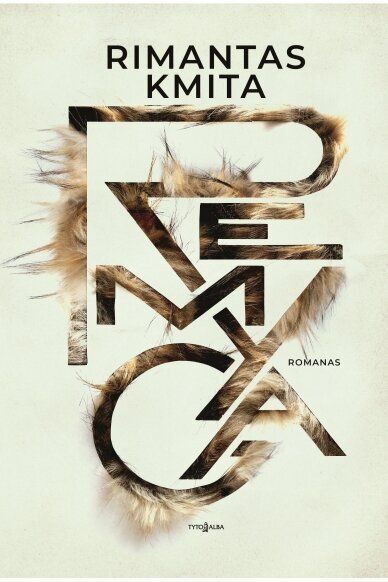
The Edita Complex
Rimantas Kmita
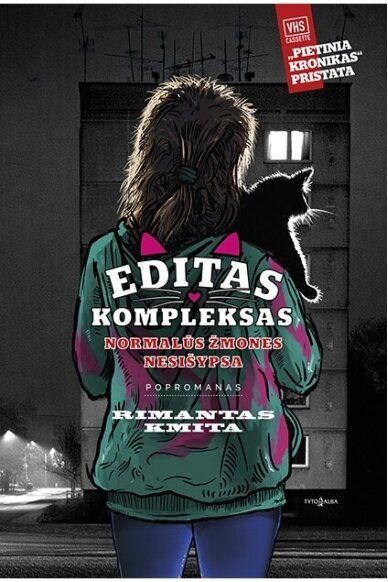
"Edita, don’t be a fool, he’s not for you..." It doesn't take much wisdom to say that. The diagnosis is clear. But what do you do when the truth hurts? Huh? Fantasies don’t hurt. On the contrary—fantasies themselves are the painkillers.
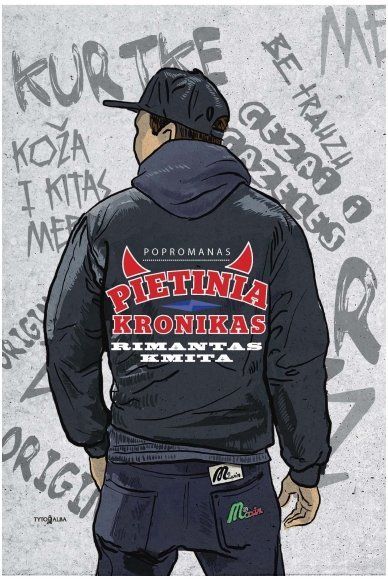
Edita comes from the world of Southside Chronicles (Pietinia kronikas). Her story traveled from the novel to the movie screen, then stepped onto the theater stages of Šiauliai and New York. Finally, holding a VHS tape in her hand, she tells her own version of the story in the novel Editas kompleksas (The Edita Complex).
“At first glance, it’s a story about a seventeen-year-old girl in love with a guy from the same apartment block courtyard. But in reality, it’s about what it means to grow up when you don’t know how to voice what you feel—when Dirty Dancing and other movies unexpectedly help you understand love, your body, and yourself. With humor and melancholy—the only way I really know how to tell a story—I write about how we, having escaped the 'Soviet ferment,' wanted to reach our dreams and be loved as fast as possible. But we didn't know how to break free from the lingering, old-fashioned smell of stuffed cabbage (balandėliai), how to express our feelings, and how to find our own path. I’d like to be that friend of Edita’s who hugs her and says: 'You little dummy.' And one more thing—I wanted to write a story about the hunger for real life. That feeling has never gone away.” — Rimantas Kmita
About the Author: Rimantas Kmita
Rimantas Kmita is one of Lithuania's most popular and influential contemporary writers, as well as a literary critic and a Doctor of Humanities. He is credited with revitalizing Lithuanian literature by integrating authentic spoken dialects and elements of popular culture into high art.
Career and Achievements:
- The Breakthrough: He gained widespread acclaim with his debut novel "Pietinia kronikas" (Southside Chronicles, 2016), written in the specific Šiauliai dialect. The book became a cultural phenomenon, inspiring both a theatrical play and a feature film.
- Literary Style: Kmita is known for blending academic insight with street culture. His work is characterized by irony, social sensitivity, and an exceptional eye for the details that bring history to life.
- Versatility: Beyond novels, he writes poetry, opera librettos, and scripts, and continues to publish scholarly research.
- Awards: He has received numerous accolades, including the Jurga Ivanauskaitė Prize and multiple Book of the Year awards in Lithuania.